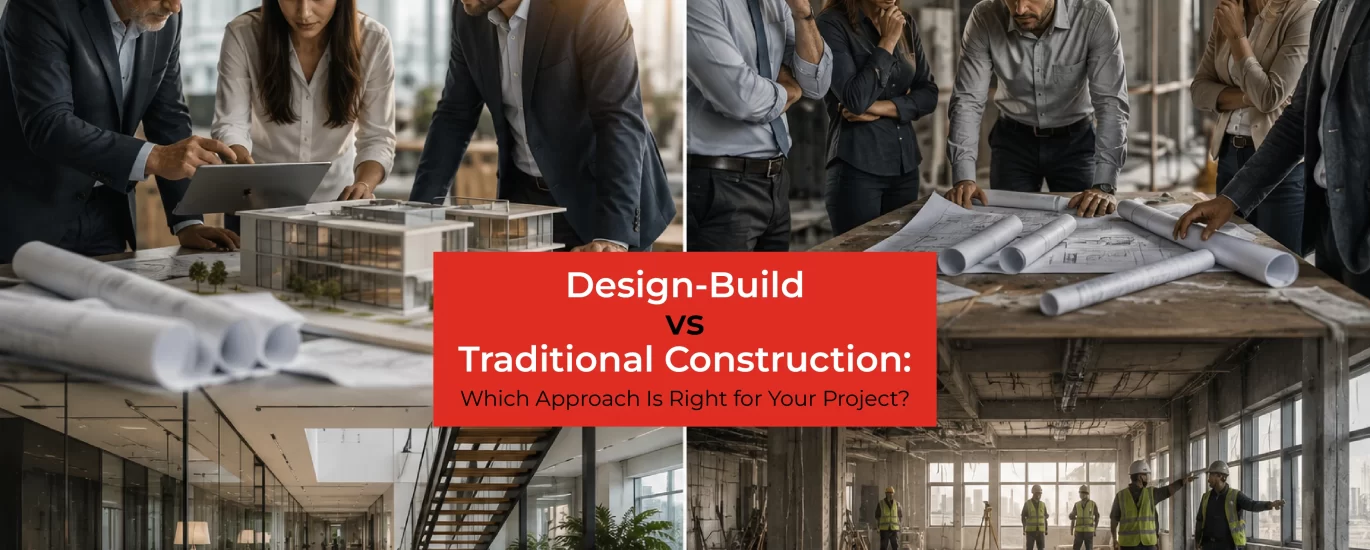
Every construction project begins with a vision, but turning that vision into a finished space requires the right approach to planning, design and execution. One of the earliest decisions a project owner needs to make is how the project will be delivered. Two of the most widely used approaches are design-build and traditional construction.
While both methods can successfully deliver commercial and institutional projects, they differ significantly in how design, construction, contracts and responsibilities are structured. Understanding these differences can help businesses make an informed decision based on their project requirements, timeline, budget and desired level of involvement.
What Is Design-Build Construction?
Design-Build Construction brings the design and construction functions together under a single contract and, typically, a single project team. Instead of appointing separate architects, designers, and contractors, the client works with a single entity that takes responsibility for both stages.
The Design-Build Process begins with understanding the client’s objectives, site conditions, budget, and functional requirements. The design team then develops the concept and technical details while working closely with the construction team. This collaboration continues through procurement, execution and completion.
The result is a more integrated approach in which design decisions can be evaluated alongside construction considerations from the outset.
What Is Traditional Construction?
Traditional Construction generally separates design and construction into two distinct stages. The project owner first appoints an architect or design consultant to develop the drawings and specifications. Once the design is completed, a contractor is selected to execute the project.
This Traditional Construction Method has been used extensively across the industry and remains suitable for many types of projects. It allows the client to independently select design and construction specialists, which can be advantageous when specific expertise or competitive contractor selection is important.
However, because separate parties handle design and construction, coordination between them can be an important consideration.
Design-Build vs Traditional Construction: The Key Difference
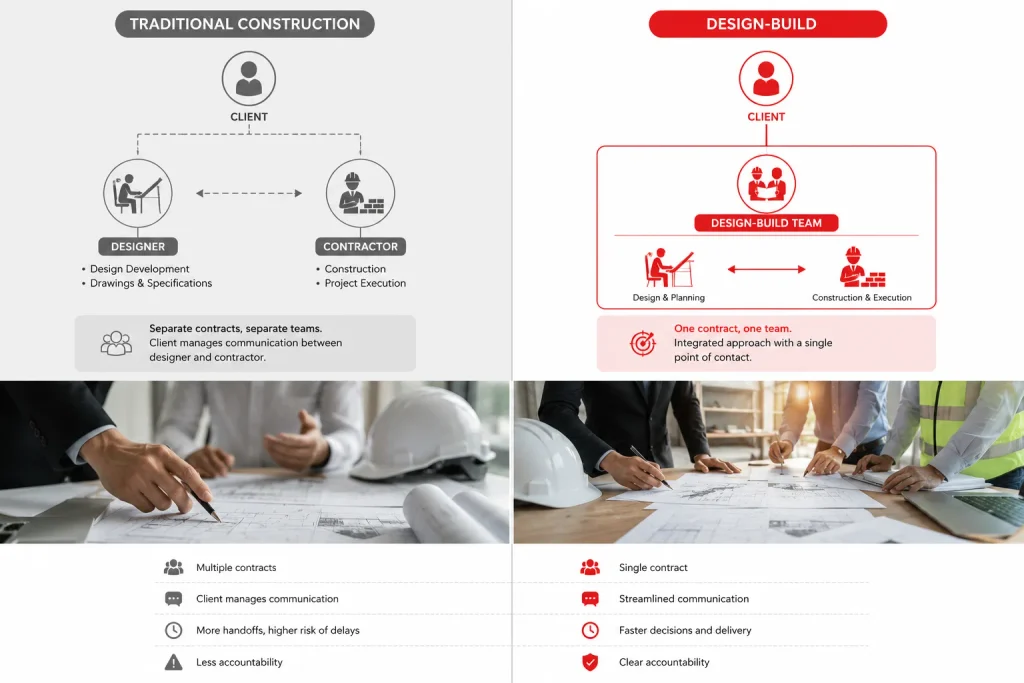
The fundamental difference lies in responsibility and project structure.
In a traditional model, the designer and contractor have separate roles and contractual relationships. The client acts as the link between the two, coordinating with both parties throughout the project.
With Design Build Project Delivery, the design and construction responsibilities are consolidated. The client has one primary point of contact, while the design and construction teams work together to develop and execute the project.
This distinction can influence communication, decision-making, timelines and accountability throughout the construction process.
How Does the Design-Build Process Work?
The Design-Build Process typically begins with defining the project’s scope and objectives. The design-build team then develops an initial design based on the client’s requirements and budget.
As the design progresses, construction specialists can contribute practical input regarding materials, costs, sequencing and buildability. This allows potential challenges to be identified earlier rather than after the design is complete.
Once the design is finalised, construction moves forward under the same project structure. Procurement, site execution, quality control and project management remain coordinated through the design-build team.
This integrated workflow is one of the key reasons organisations consider design-build for projects where time, coordination and accountability are major priorities.
What Is a Design-Build Contract?
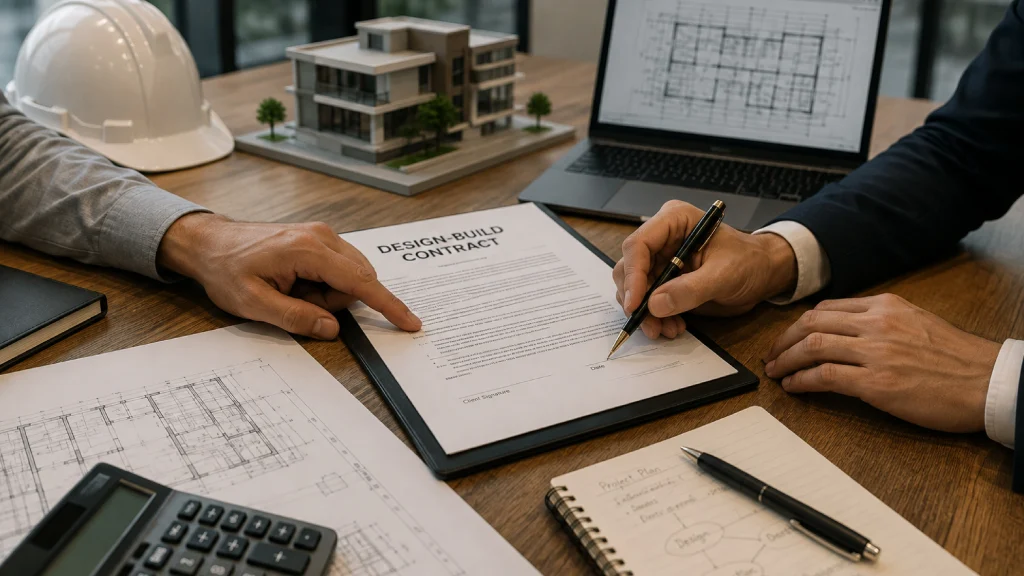
A Design-Build Contract is an agreement in which the design and construction responsibilities are generally assigned to a single entity. The exact scope, commercial terms, timelines, deliverables and responsibilities are established within the contract.
For the client, this creates a single contractual relationship for the core design and construction scope. It also establishes clearer accountability for coordinating the different phases of the project.
The structure of the contract can vary depending on the nature of the project, so it is important to clearly define design responsibilities, approvals, specifications, costs, timelines and changes before work begins.
Understanding Design-Build Benefits
One of the biggest Design-Build benefits is improved coordination. Since designers and construction professionals are working within the same project structure, communication can be more direct, and decisions can be made with both design and execution in mind.
The approach can also help streamline project delivery. Certain design and construction activities may overlap, allowing work to progress more efficiently than a strictly sequential model.
Another advantage is accountability. With a single design-build entity responsible for the integrated scope, clients have a clearer point of responsibility when questions or issues arise.
Design-build can also support greater cost awareness during the design stage. Construction expertise is brought into the process early, allowing design decisions to be considered alongside their practical and financial implications.
Where Traditional Construction Can Work Well
Traditional construction remains a proven and effective delivery method. For some projects, separating design and construction can provide greater flexibility when selecting specialists for each stage.
A client may have an established architect or design consultant they prefer to work with and may want to appoint a contractor separately based on pricing, technical expertise, or previous experience.
The traditional approach can also work well when the project scope and design are highly developed before construction procurement begins. With detailed documentation in place, contractors can price and execute the defined scope.
However, the success of this model depends heavily on communication between the owner, designer and contractor. Gaps in documentation or interpretation can sometimes result in delays, changes or additional coordination.
Design-Build vs Traditional Construction: Which Is Faster?
Project timelines depend on several factors, including project size, approvals, procurement, site conditions and scope. However, design-build can shorten the overall schedule by enabling design and construction teams to collaborate from the outset.
In some projects, construction-related activities can begin while portions of the design are still being developed. This can create a more continuous workflow.
Traditional construction generally follows a more sequential path, with design completed before the contractor begins execution. While this can provide greater definition before construction starts, it may result in a longer overall process for certain project types.
Comparing Construction Project Delivery Methods
Choosing among Construction Project Delivery Methods should begin with the project’s priorities rather than with the popularity of a particular model.
If a project requires a high degree of coordination, a streamlined communication structure and close integration between design and execution, design-build may be appropriate.
If the client prefers to select the design and construction teams independently or already has an established design consultant, traditional construction may be a better fit.
Budget, complexity, schedule, risk allocation and the level of client involvement should all be considered before making a decision.
When Does Design-Build Make Sense?
Design-build can be particularly effective for commercial projects, office developments, workplace interiors and projects where speed and coordination are important.
It can also be suitable for businesses seeking Design-Build Services from a single partner rather than managing multiple consultants and contractors independently.
A capable Design-Build Company should demonstrate expertise in design, engineering, procurement, construction, and project management. The value lies not simply in having multiple capabilities, but in bringing them together effectively.
Design-Build and Turnkey Construction
Design-build and turnkey construction share an emphasis on integrated project delivery, although their scopes can differ. Turnkey Construction Services typically involve delivering a completed, ready-to-use space, with one partner managing a broad range of project requirements.
For clients seeking a comprehensive solution, turnkey delivery can combine design, construction, procurement, installation, and final handover under a single coordinated structure.
The most suitable approach ultimately depends on the project’s specific scope and the level of responsibility the client wants to transfer to the project partner.
Conclusion
There is no universal answer to whether design-build or traditional construction is better. The right choice depends on the project’s objectives, complexity, timeline, budget and preferred management structure. Design-build offers integration, streamlined communication and a single point of accountability. At the same time, traditional construction provides a clear separation between design and execution and can offer greater independence in selecting consultants and contractors.
With integrated design, construction and project management capabilities, Padams Group helps businesses choose and execute the right construction approach for their requirements, delivering spaces with greater coordination, clarity and control.
FAQs
1. What is the difference between design-build and traditional construction?
Design-build combines design and construction under one contractual structure and project team. Traditional construction separates the two, with the client typically appointing a designer first and a contractor separately.
2. Is design-build faster than traditional construction?
Design-build can potentially reduce project timelines because design and construction teams collaborate closely and some activities can overlap. Actual timelines depend on project scope, approvals, procurement and site conditions.
3. What are the main benefits of design-build construction?
Key Design-Build Benefits include integrated communication, a single point of responsibility, closer coordination between designers and contractors, potentially faster delivery, and greater cost awareness during design development.
4. What is a design-build contract?
A Design-Build Contract is an agreement that generally assigns both design and construction responsibilities to a single entity. It defines the scope, deliverables, commercial terms, timelines and responsibilities of the project.
5. Is traditional construction still relevant?
Yes. Traditional construction remains widely used and can be effective when clients want to appoint designers and contractors independently or prefer to work with a well-established design team.
6. Which construction method is better for commercial projects?
Both methods can work for commercial projects. Design-build may be advantageous when coordination, speed and single-point accountability are priorities, while traditional construction may suit projects where design and contractor selection are intended to remain separate.
7. What should I consider before choosing a project delivery method?
Consider the project’s budget, timeline, complexity, scope, risk allocation, desired level of client involvement and the level of integration required between design and construction.
8. What are turnkey construction services?
Turnkey Construction Services involve managing a broad range of project requirements through a single partner, often delivering a completed space ready for occupation or use. The exact scope depends on the project and contract.
For more information, please visit padams.in and follow Padams Group on LinkedIn, Facebook, Twitter, and Instagram.